The candidate wallet, end to end
All eight screens — onboarding to matched jobs — each the real, interactive prototype.
Credentials aren't messages. They're proof you carry.
The first build asked a student to message a school and wait for a reply in a thread — a credential was a conversation. The reframe was the redesign: a diploma became a verified card in a wallet, held and provable, ready to submit to a job in one tap.
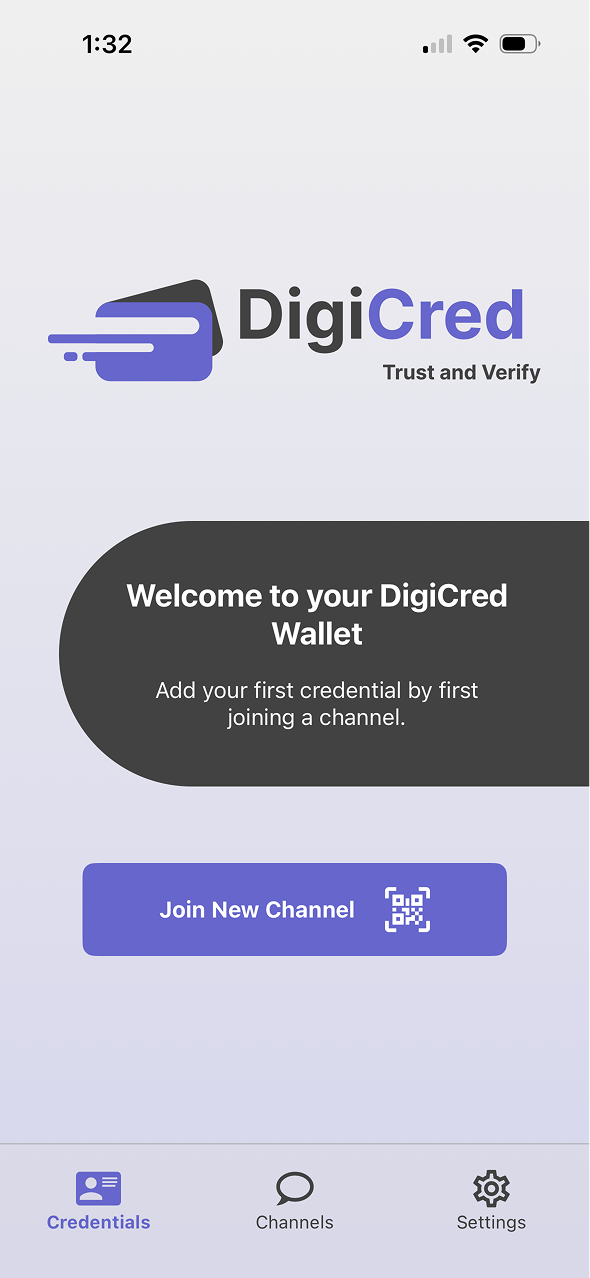
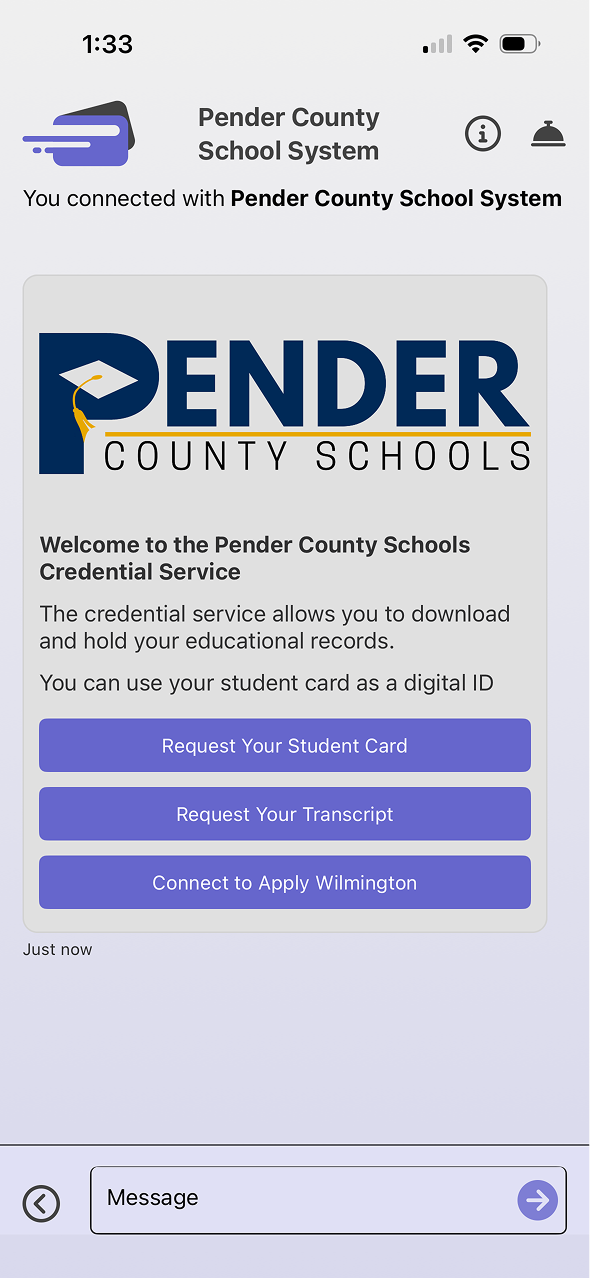
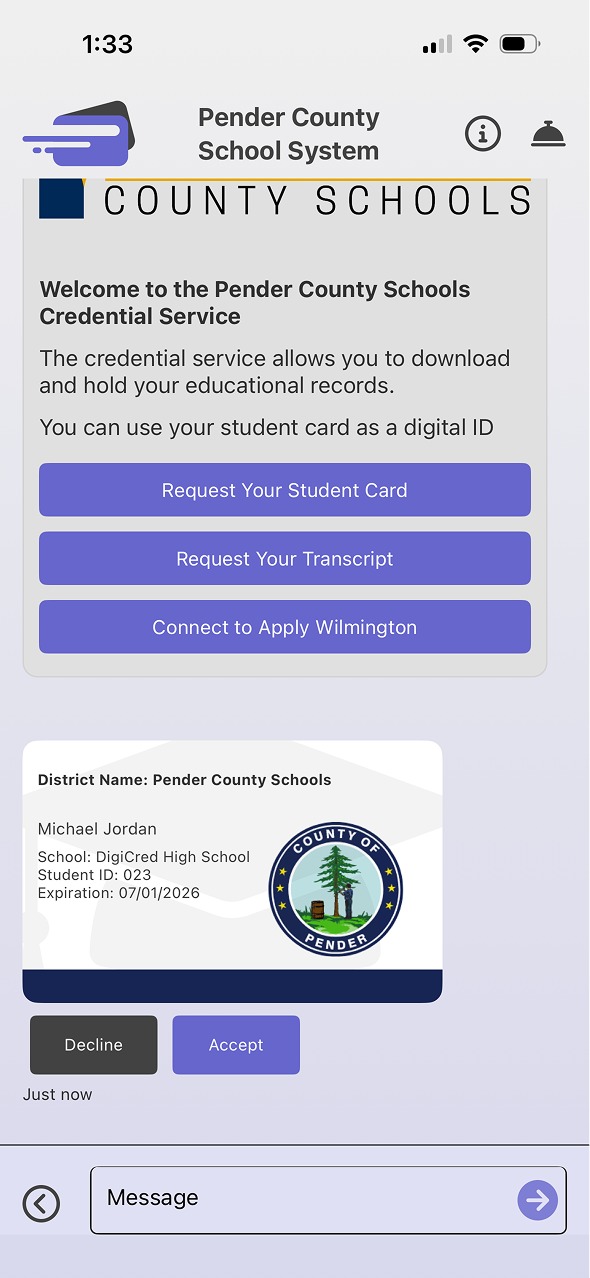
A learner's proof is scattered — and unprovable.
A high-school or college student's most valuable assets — transcripts, school IDs, diplomas, licenses, the skills on a résumé, plus the NFTs and crypto they hold — live scattered across portals, PDFs, and separate apps. None of it is legible or verifiable on sight, so none of it easily converts into a job. The technology that could unify it, verifiable credentials and decentralized identity, is powerful but alien to a student. Trust and legibility were the scarce resources, not features.
Powerful tech, built for cryptographers — not candidates.
Verifiable credentials solve authenticity: cryptographically signed, anchored, tamper-proof. But every consumer surface exposed the machinery — wallet addresses, proof hashes, issuer DIDs. A student trying to import a diploma or apply to a job met jargon, not confidence. The failure wasn't the protocol; it was the absence of an interface built for a student's mental model.
Hold
Match
Apply
Legibility builds trust, not simplification.
The instinct is to hide the complexity. That's backwards: for something as consequential as your identity and your next job, hiding the detail erodes trust. The move was to surface the parts that matter — the issuer's logo, the credential name, a persistent verification indicator anchored to real-time proof — and map each action onto a model the student already holds: a credential that reads like an ID, holdings that read like a wallet, a job match that reads like a checklist.
Three views: hold, match, apply.
This is where my work lived — the DigiCred Wallet's three core surfaces. The Credential Vault: import a diploma by QR or API, hold it beside your NFTs and crypto, and group transcripts, badges, and licenses into one LER/CLR package. The Matched Jobs Feed: roles a learner instantly qualifies for, each match showing exactly which credential earned it — green for required, yellow for preferred. And the Application Confirmation: a single modal that submits only the verified credentials the learner chooses, with an audit-trail link anchored to KanonVDR proof.
From scattered proof to one-tap apply.
Learners moved from fragmented, unprovable assets to a wallet that holds verified credentials, surfaces the jobs they qualify for, and applies with a single tap — and usability testing measurably reduced perceived friction across the verification flows. When proof is legible and portable, a student's skills finally convert into opportunity.
Proven
Next
Measure
DigiCred's design language
A copper brand and a warm chalk ink on a breathing charcoal canvas, with three asset-class tints — credential green, NFT amber, crypto violet — that turn a student's scattered assets into one portfolio of proof.
Cards are asset classes
One card system holds it all — credentials (green), NFTs (amber), and crypto (violet). A verified diploma sits beside the assets you own, each legible on sight.
Green means verified
A single reserved green marks anything anchored to real-time proof. The same green flags the credentials that make you a required match for a job.
The tech stays invisible
DIDs, proof hashes, and issuer signatures never surface. The learner sees a system they can read and trust — a credential that reads like an ID.
A canvas that breathes
The charcoal ground drifts grey → black on a 13-second loop, just below notice, and deepens on the loud beats of the voiceprint — the app feels alive on mute. Motion is honored only when the reader hasn't asked to reduce it.
These aren't swatches in a slide. Every token is declared once in tokens-art.css, mirrored in Design.md, and read live on this page — so it can't drift. The same contract is what Claude, Cursor, and Figma Make built these screens against, and validate-design-system.sh fails the build if any of us drifts off it.
Hold & Share
The DigiCred Wallet for learners on Apply Wyoming — hold credentials, NFTs, and crypto, match to the jobs you qualify for, and apply with one tap of proof. (Live Figma deck renders in the real Next.js page.)